Emerging Markets: Argentina and Botswana Enter the Chat
While Europe closes doors, the Global South is building new ones. Two programs that could reshape the 2026 market.
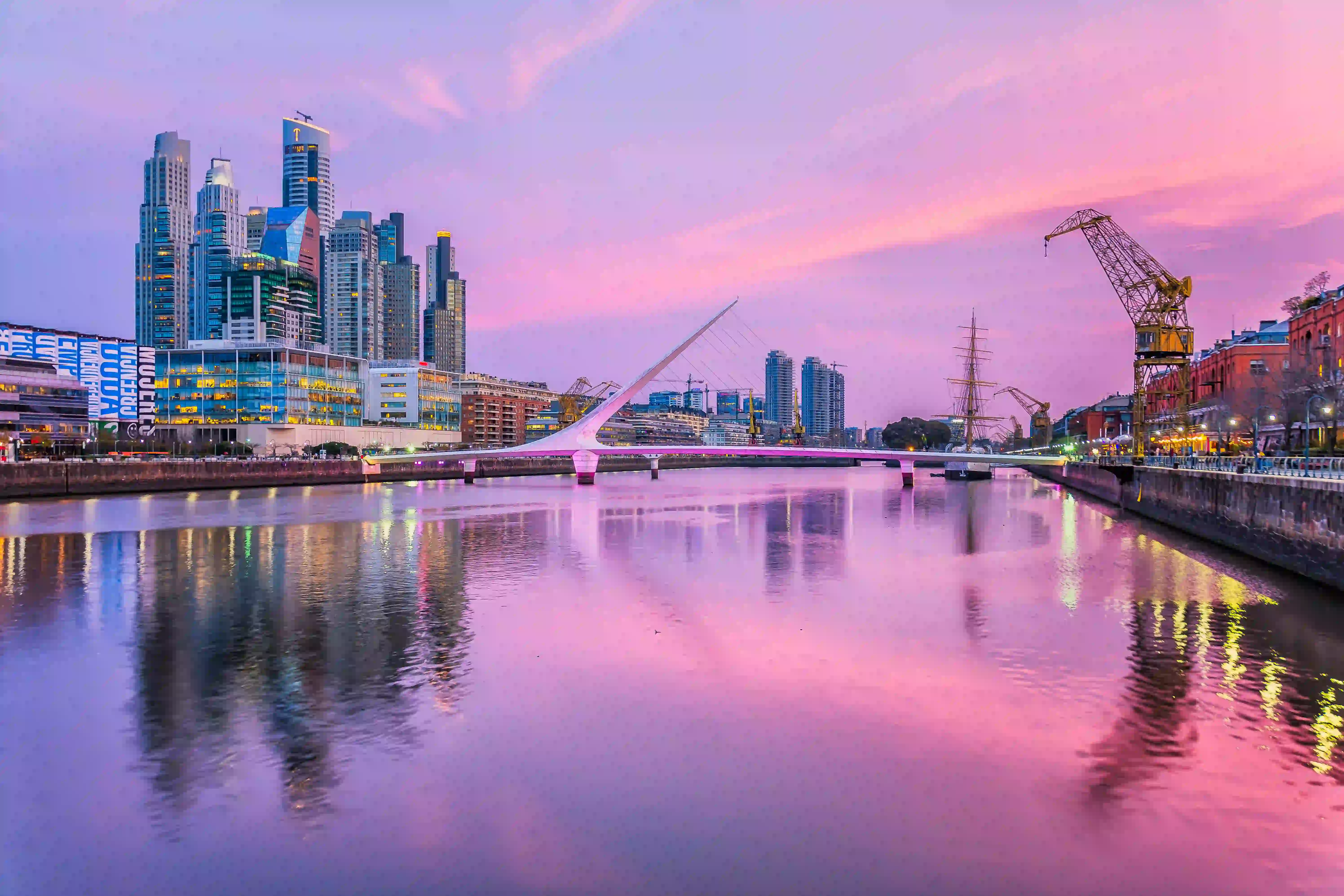
For the last decade, the investment migration map was predictable. Caribbean for speed, Europe for status, Dubai for tax. That map is being redrawn.
The EU killed Malta's citizenship program in April 2025. Spain's Golden Visa is dead. Portugal is clinging to a fund route that gets less attractive every year. The Caribbean, meanwhile, faces coordinated pressure from Brussels and Washington, with prices now starting at $200,000 and climbing.
Into this vacuum, two countries from the Global South have announced frameworks that look nothing like what came before: Argentina and Botswana.
One is a G20 nation offering citizenship through productive investment at around $500,000. The other is one of Africa's most stable democracies, pricing entry at $75,000 — cheaper than any Caribbean option currently on the market.
Both programs are still in framework stage. Argentina has the decrees; Botswana has the MoUs. Final implementing rules will determine whether the early projections hold. But the direction is clear, and for clients watching the traditional markets tighten, these might be the most interesting plays of 2026.
Argentina: Citizenship for Capital That Does Something
Javier Milei's government has taken a chainsaw to Argentine economic policy. Immigration is part of the overhaul.
In mid-2025, Decree 366/2025 amended Argentina's nationality law to add a citizenship-by-investment pathway. Decree 524/2025 followed in July, establishing the formal framework and creating a new Agency for Citizenship by Investment Programs under the Ministry of Economy.
This isn't a Caribbean-style donation. And it's not a European-style "buy an apartment and wait five years." Argentina is asking for productive capital — money that builds something.
Program briefings indicate a minimum investment around $500,000 into what the decrees call "productive and strategic sectors": agribusiness, renewable energy, technology, infrastructure. The government isn't trying to solve a housing crisis. They're trying to solve a liquidity crisis. They want you funding lithium extraction in Jujuy or backing tech startups in Buenos Aires, not flipping condos in Palermo.
The payoff is significant: naturalisation without a prior-residence requirement. You don't need to live in Argentina for two years before applying. Once the new agency reviews and approves the investment, decisions are targeted within roughly 30 business days. That's weeks, not years.
The Argentine passport is a top-20 travel document globally — roughly 170 destinations visa-free or visa-on-arrival, including the UK, Schengen, and Japan. For $500,000 in working capital, you're getting G20 citizenship with genuine global mobility.
The Argentina Risk
Let's be direct: you're betting on Argentine political and economic stability, which historically has the half-life of a fruit fly.
The legal framework is real. The decrees exist. But implementing regulations aren't final, and Argentine bureaucracy has a way of adding friction that presidential decrees don't anticipate. The agency is new. The process is untested. There will be surprises.
There's also currency risk, political risk, and the ambient chaos that comes with any major Argentine policy initiative. Milei's reforms could stick and transform the country. They could also collapse in two years. Nobody knows.
That said, the structure explicitly bypasses the old rentista residency path — the bureaucratic hellscape that made traditional Argentine immigration a multi-year slog. The framework is designed for speed and for investors who want citizenship, not just residency.
If you believe in the Milei turnaround, this is one of the best deals available. If you don't, you probably shouldn't be parking $500,000 in Argentine ventures anyway.
Who Argentina Is For
This makes sense if:
- You have $500,000+ to deploy into actual productive investment (not passive holding)
- You're comfortable with emerging market risk and Argentine political volatility
- You want a G20 passport with strong global mobility
- You don't need — or want — to physically relocate
- You have an appetite for a high-risk, high-reward jurisdiction bet
This doesn't make sense if:
- You want a passive, set-it-and-forget-it investment
- Political instability keeps you up at night
- You need certainty about timelines and process
- You're looking for a "safe" second passport
Argentina is the active investor's play. The upside is real. So is the variance.
Botswana: The $75,000 Market Breaker
If Argentina is targeting industrialists and venture-minded investors, Botswana is coming for everyone else.
Announced during UN General Assembly events in September 2025, Botswana's Impact Investment Program is expected to launch in early 2026. The government has partnered with external advisory firms to design the framework, and program briefs have been circulating since late last year.
The headline number: $75,000. Possibly up to $90,000 depending on structure and fees, but the floor is $75,000.
That's cheaper than Dominica. Cheaper than St. Lucia. Cheaper than Antigua. Cheaper than the entire Caribbean post-MoU, where the new floor is $200,000 and climbing.
The investment goes into national development projects — housing, tourism infrastructure, mining diversification, renewable energy. Botswana knows its diamond reserves are finite. This program is an economic pivot: attract foreign capital and diversify the economy before the mines run dry.
Why Botswana Might Actually Work
Botswana is not a typical "frontier" jurisdiction. It has an investment-grade credit rating (A-range depending on agency), one of Africa's strongest governance track records, and consistently ranks as the continent's least corrupt nation.
The passport isn't a global powerhouse — around 90-100 destinations visa-free or visa-on-arrival — but it offers solid regional utility in Southern Africa and access to markets where a Botswana passport may actually open doors that a U.S. or EU passport doesn't.
For a certain type of client, this is the most efficient capital deployment in the industry.
That client isn't optimizing for Schengen access. They're not trying to get visa-free into Japan. They need a "Plan B" — a clean second citizenship from a stable, well-governed country that isn't going to collapse or get sanctioned. They want a paper shield, and they want it cheap.
At $75,000, Botswana is offering exactly that. If you already hold a U.S. or UK passport for travel, adding Botswana gives you geographic diversification, a second legal identity, and optionality — all for less than the cost of a luxury car.
The Botswana Risk
The program isn't live yet. We're working from MoUs, consultancy briefs, and government announcements — not final legislation.
"Early 2026" could slip. Terms could change. Processing timelines and any residence requirements are still to be confirmed in the implementing regulations. The $75,000 number is what's being projected; the final number could be higher.
There's also the unknown factor: Botswana has never run a CBI program before. The infrastructure for processing applications, conducting due diligence, and issuing citizenships at scale doesn't exist yet. First-tranche applicants will be the beta testers — they get the lowest price, but they also get the bugs.
But the intent is clear. The pricing is aggressive enough to suggest Botswana wants first-mover advantage in a market where Caribbean programs are pricing themselves out of reach.
Who Botswana Is For
This makes sense if:
- You want a low-cost second citizenship from a stable, well-governed country
- You don't need top-tier global mobility (or you already have it from another passport)
- You're looking for optionality and diversification, not a primary travel document
- You're comfortable being an early adopter in a new program
- $75,000-$90,000 is a reasonable amount to allocate for citizenship insurance
This doesn't make sense if:
- You need Schengen or extensive Asia-Pacific visa-free access
- You want a program with a long track record
- You're uncomfortable with launch-phase uncertainty
- You're optimizing purely for passport strength
Botswana is the utility play. Cheap, stable, boring. In this industry, boring is good.
The Bigger Picture
The euro-centric Golden Visa era is fading. The EU has made it legally and politically toxic to sell residency. The countries that once anchored the industry — Portugal, Spain, Malta — are either closed or circling the drain.
The Global South doesn't carry that baggage. Argentina and Botswana need capital, and they're willing to build programs that compete for it.
This is what market disruption looks like. One G20 country offering citizenship through productive investment, no residence required. One African democracy offering citizenship at a price point the Caribbean can't match.
Both are bets. Argentina is higher risk, higher reward — a top-20 passport if you're right about the country's trajectory. Botswana is lower risk, lower reward — a solid Plan B at a price that makes it almost a default add for anyone building a citizenship portfolio.
We're opening waitlists for both. First-tranche applicants will get implementation updates as the regulations finalize. If you want to be positioned before the programs go live — and before the inevitable price adjustments — let's talk.
KEY TAKEAWAYS
Argentina (~$500k): High risk, high reward. A G20 passport for active investors who believe in the Milei pivot. Top-20 global mobility. No residence requirement.
Botswana (~$75k): The new price floor. A "Plan B" utility play for those priced out of the Caribbean. Stable jurisdiction, modest mobility.
Status: Both programs are in framework stage. Waitlists open; final regulations pending.